

Erythrocyte Sedimentation Rate (ESR)
A Simple Test with Major Implications
The erythrocyte sedimentation rate measures how quickly red blood cells settle to the bottom of a tube. Although simple, this test can detect inflammation, which can be an indicator of many chronic or acute diseases such as arthritis, autoimmune diseases, infections, and some types of cancer. Having a trusted, independent control to verify results is critical.

Importance of QC in ESR Testing
Inflammation raises circulating fibrinogen and immunoglobulins, which neutralize the charge that normally keeps red cells dispersed, causing the red cells to clump. ESR measures inflammation by measuring the rate at which red cells fall to the bottom of a specialized tube. Clumped red cells fall faster, indicating higher levels of inflammation. ESR tends to rise more gradually and remain elevated longer than C-Reactive Protein (CRP), which can make it a useful complement when evaluating chronic or subacute inflammatory conditions. ESR also tends to be more broadly accessible, since the manual method can be performed with a tube and rack rather than a dedicated analyzer. Unlike chemistry tests such as CRP, ESR is a manual test with no calibration possible—quality control is even more critical and should be used to monitor and help ensure the reliability of patient results.
Where QC Creates Value
As ESR measures how red blood cells settle in a tube over time it cannot be calibrated. That leaves the quality control carrying more of the verification burden to ensure patient results.
No Calibrator Exists
No calibration exists for the ESR test, and laboratories must follow the quality guidelines outlined by CLSI H02-A5. Quality controls are important to help ensure that ESR tests are performed correctly.
ESR Testing Is Sensitive to Bench Conditions
ESR tube tilt, ambient temperature, specimen age, and rack vibration may impact the test result. Quality controls provide a standard against which laboratories can validate their test results.
Varying ESR Methods may not Correlate
Automated ESR instruments can diverge from manual Westergren methods, and non-Westergren methods can diverge from one another as well. Using a quality control helps identify and manage those differences.
Evidence
Method Correlation
Comparative data on automated versus manual Westergren ESR results, and where the two methods tend to diverge.
Scientific Research
Automated vs. Westergren Method Comparison
A direct comparison of an automated ESR analyzer against manual Westergren across paired samples.
Dependable ESR Controls for Your Laboratory
ESR-Chex® and ESR-Chex® Plus are assayed controls designed to evaluate the accuracy and precision of ESR testing methods — ESR-Chex for manual and automated methods, and ESR-Chex Plus for automated methods. Both are manufactured from human red blood cells and can be used in the same manner as a patient sample.
Products
Assayed
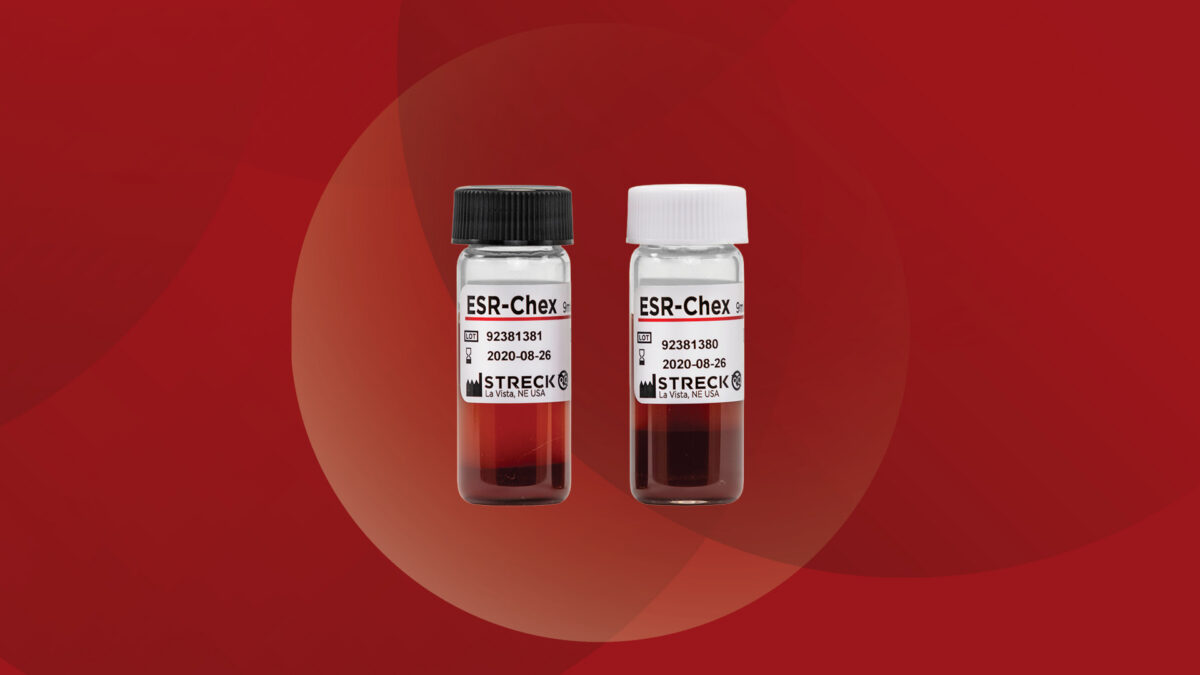
ESR-Chex
Bi-level whole blood control assayed for both manual and automated Westergren and Wintrobe based methods. 95-day open-vial stability and 365-day closed-vial stability.
Assayed
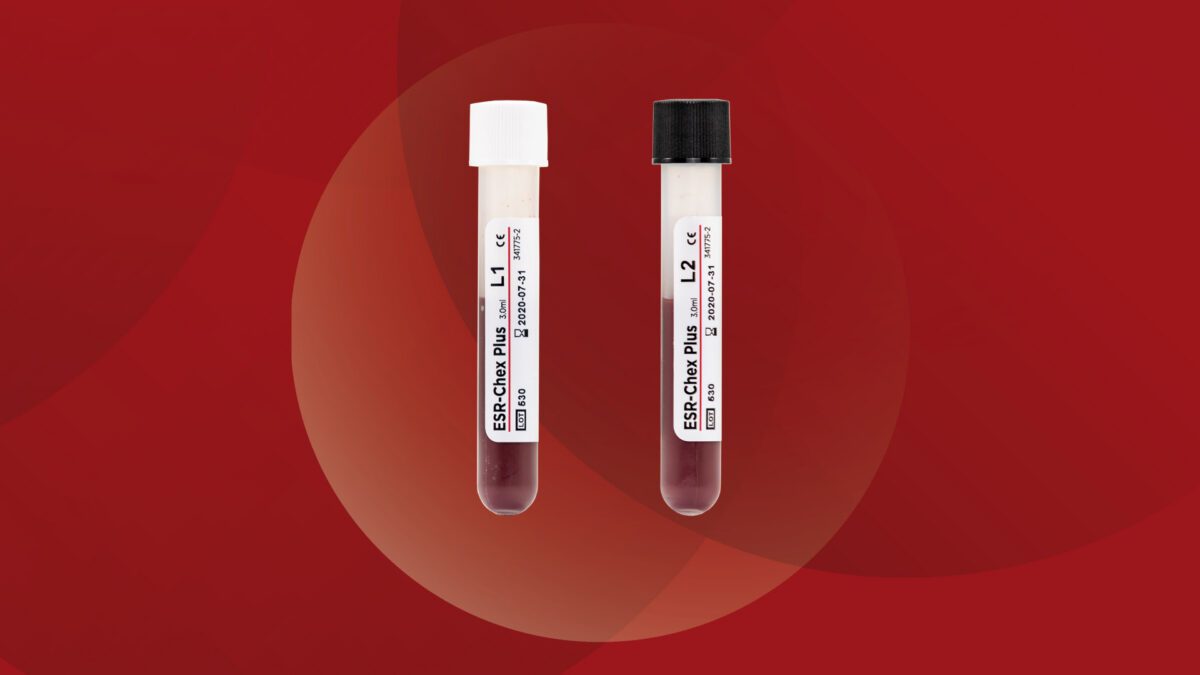
ESR-Chex Plus
Bi-level whole blood control for automated EDTA-tube methods, assayed for the Diesse CUBE 30 Touch and MINI-CUBE. 7-day open-vial stability and 365-day closed-vial stability.
Documentation & Standards
Documentation
Instructions for Use
Package inserts, assay sheets and certificates of conformance by lot.
Global
ISO 15189
The international standard for quality and competence in medical laboratories, including QC requirements.
EU
EU IVDR 2017/746
ESR-Chex and ESR-Chex Plus are CE-marked IVDs; see the Instructions for Use for the EU Authorized Representative.
US
Standard
Peer Data
STATS® ILQC
Interlaboratory Peer Program is included. Benchmark your laboratory’s performance against others using the same methods and utilize the data to support accreditation.
Partner With Streck
Leading instrument manufacturers partner with Streck to provide their customers with dependable third-party quality controls. Streck is the leader in cell stabilization for over 50 years and continues to manufacture and develop high performing controls.
- Sophisticated R&D to rapidly develop products
- Advanced QC, with barcoded solutions and included ILQC program for increased value
- Highly trained technical and sales support

Why Utilize Streck Controls
For over 50 years, Streck has been the leader in blood-based controls utilizing its proprietary cell stabilization technologies. Many leading instrument manufacturers trust Streck to provide their customers with highly independent controls. We help ensure your laboratory can trust its testing results.
54+
years of scientific excellence
Zero
FDA recalls
70,000+
labs worldwide rely on
Streck products
ISO 13485
certified manufacturing