

Antimicrobial Resistance Testing
Know the Resistance Before You Choose the Drug
Molecular detection identifies key resistance genes in Gram-negative bacteria directly from an isolate, often faster than a phenotypic susceptibility result, so stewardship and infection control decisions don’t have to wait.

Resistance Doesn’t Wait for a Susceptibility Result
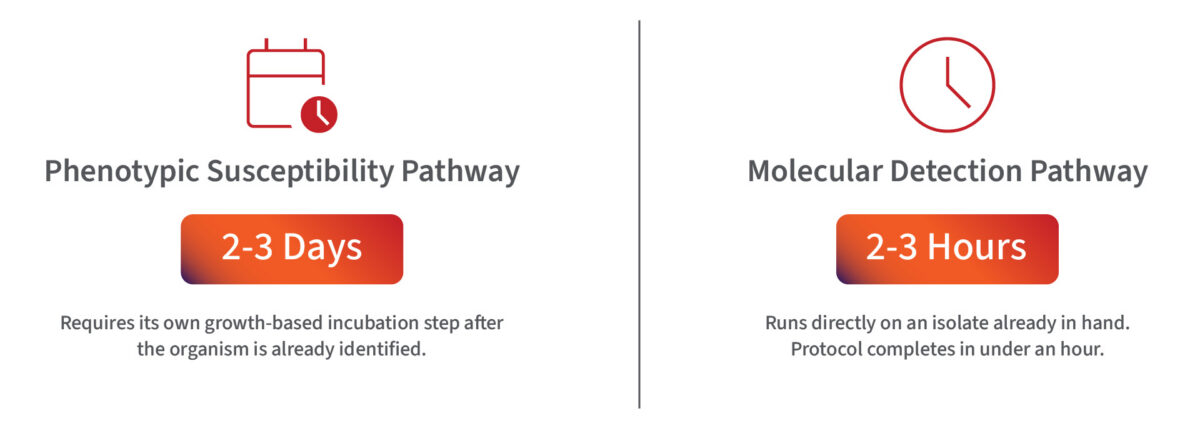
An estimated 2.8 million antimicrobial-resistant infections occur in the United States each year, and more than 35,000 people die as a result (CDC, Antibiotic Resistance Threats in the United States, 2019). Phenotypic susceptibility testing requires its own growth-based incubation step after an organism has already been identified; molecular detection of the resistance gene itself, run directly on an isolate already in hand, completes in under an hour and names the specific gene, not just resistant or susceptible.
Where Detection Creates Value
Reporting resistant or susceptible tells a clinician what happened. Naming the gene tells them why. As the Infectious Disease Testing overview lays out, different chemistries fail at different points in the workflow — here, the failure mode isn’t a missed step but a missed gene family, since carbapenemases, ESBLs and AmpC β-lactamases are frequently carried on mobile plasmids and spread between patients, animals and the environment more readily than chromosomal resistance.
Genotype, Not Just Phenotype
Naming the specific gene and variant, rather than only reporting resistant or susceptible, supports surveillance and stewardship decisions a phenotypic result alone can’t.
Faster Than a Phenotypic Result
Detecting the resistance gene on an isolate already in hand skips the growth-based incubation step a phenotypic susceptibility result still requires.
An Earlier Signal for Infection Control
Confirming a high-consequence resistance mechanism sooner gives infection control teams an earlier window to isolate a patient appropriately, before it spreads farther within a facility.
Time From Isolate to Resistance Call
Evidence
AmpC Has No Standard Phenotypic Test
CLSI provides guidance for phenotypic detection of both carbapenemases and ESBLs, but there is no standardized phenotypic method to confirm or screen for AmpC β-lactamases, which can be chromosomally deregulated or acquired on a plasmid.
Evidence
Gene-Family Diversity Complicates Detection
The blaIMP family shows a high degree of genetic diversity, a well-documented challenge for designing primers and probes broad enough to cover the variants actually circulating. Molecular detection carries two structural advantages over phenotypic testing: turn-around time, and definitive identification of the specific resistance gene rather than an inferred phenotype.
From Yoo et al. 2024, Introduction
Four Kits, One Per Resistance Mechanism
Each ARM-D® Kit targets a distinct gene family, so a lab can add coverage for the mechanisms most relevant to its patient population without adopting a new platform.
All four kits are compatible with most 4-channel real-time thermal cyclers, include a positive control for every gene target plus an internal control against inhibition and degradation, and complete in under an hour. All are for Research Use Only and are currently cataloged on streck.com under Specialized Testing.
Carbapenemases, ESBLs & Plasmid-Mediated AmpC
Assay
RUO
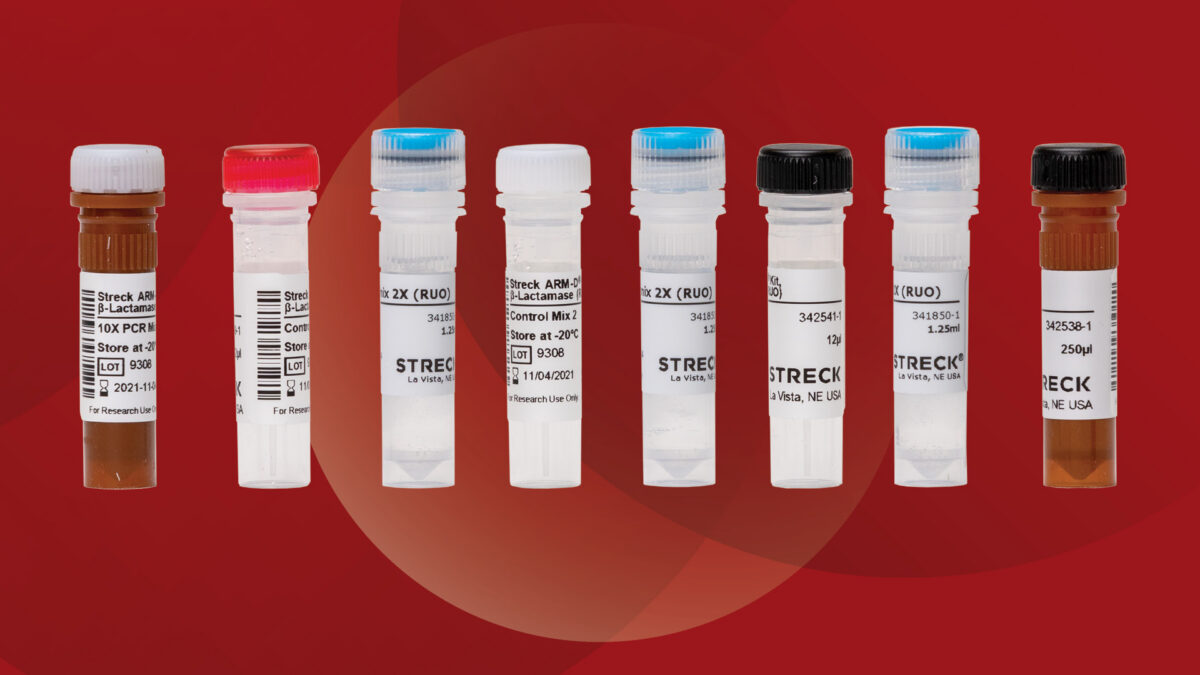
ARM-D® Kit, β-Lactamase
AmpC β-Lactamases
Assay
RUO
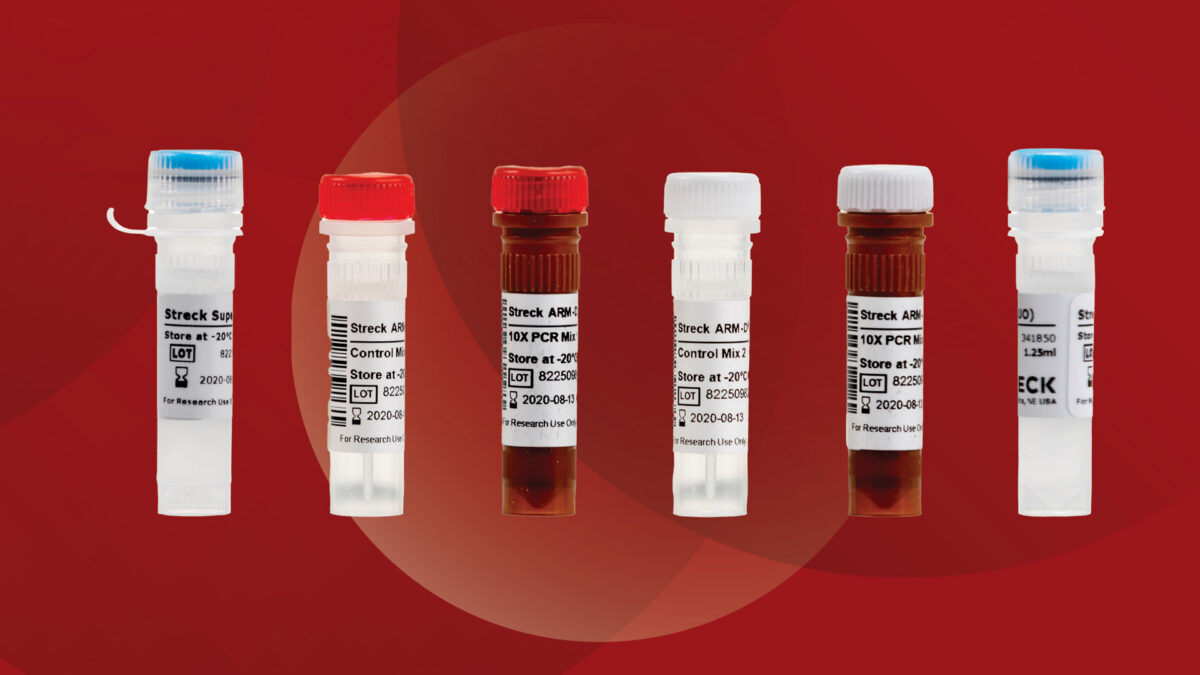
ARM-D® Kit, ampC
Detects over 200 allelic variants across the CMY02, DHA, ACC, EBC, FOX and MOX gene families, and differentiates plasmid-mediated from chromosomal AmpC resistance.
Item #250044
Oxacillinases
Assay
RUO
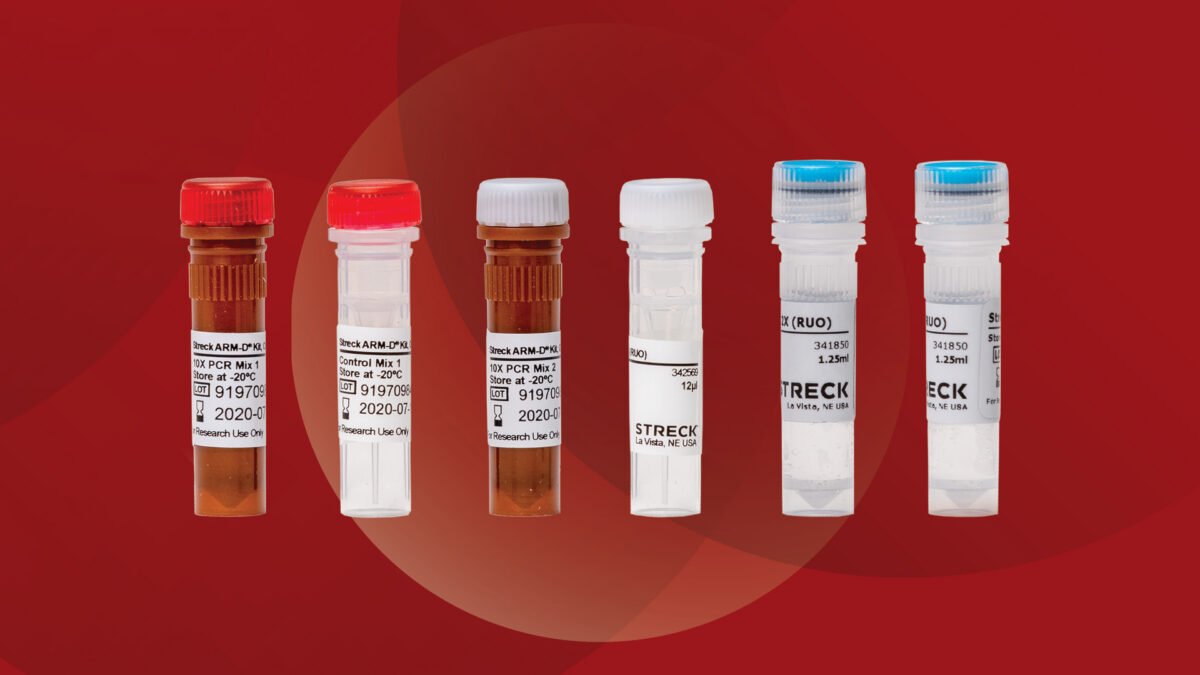
ARM-D® Kit, OXA
Detects over 500 allelic variants across 9 OXA gene families, including targets tied to carbapenem resistance in Acinetobacter.
Item #250052
Extended-Spectrum β-Lactamases
Assay
RUO
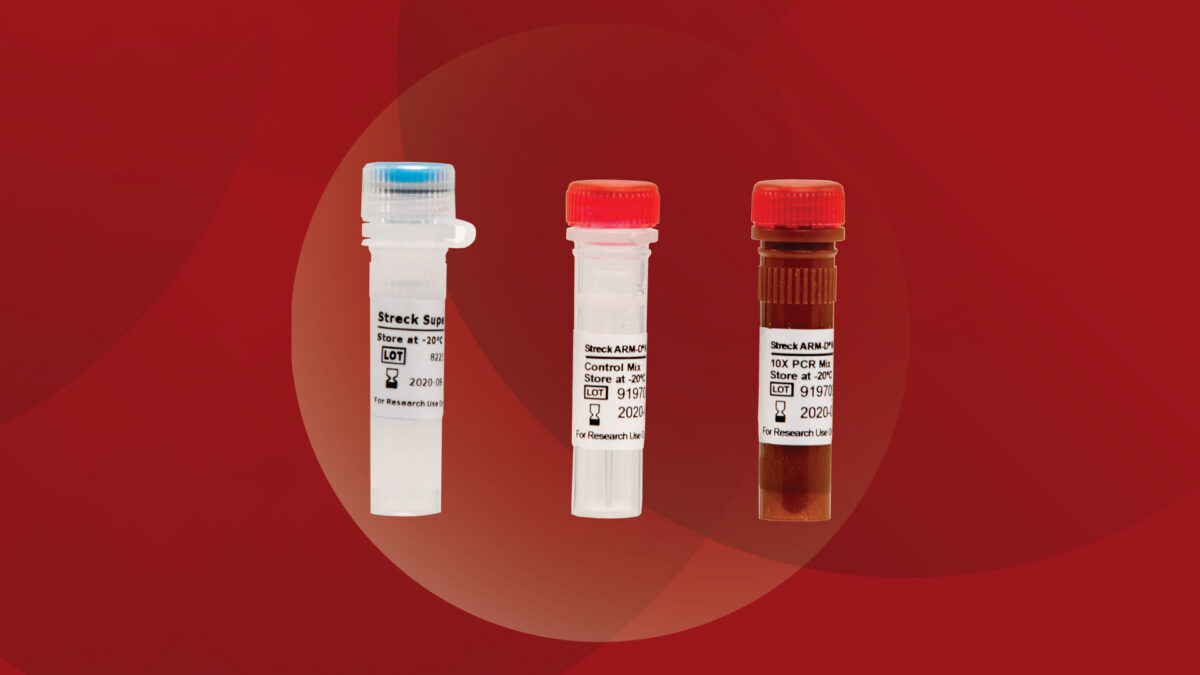
ARM-D® Kit, TEM/SHV/GES
Detects over 350 variants across the TEM, SHV and GES gene families, many of them extended-spectrum β-lactamases.
Item #250054
Documentation
Instructions for Use
Package inserts, quick start guides and instrument-specific data acquisition guides for all four ARM-D® Kits.
Evidence
Yoo et al. 2024
The independent CDC-authored evaluation of the β-Lactamase kit, published in J Glob Antimicrob Resist.
Standard
CLSI MM17
The guideline used to calculate this evaluation’s sensitivity, specificity, PPV, NPV and accuracy.
Portfolio
Full Molecular QC Line
Browse Streck’s molecular controls for the assays ARM-D® Kits are run alongside, across every application in this cluster.
Expanding Coverage Alongside Emerging Resistance
Resistance mechanisms don’t stay fixed, and a gene family that’s rare today can become clinically significant within a few years. If your lab or health system is tracking an emerging resistance target not yet covered by an existing ARM-D® Kit, Streck’s molecular team can talk through what a custom detection panel would take.
Built for Full-Process Reliability
Independently manufactured assays that include a positive control for every gene target and an internal control against inhibition, degradation and poor extraction, so a negative result means the gene truly isn’t there.
54+
years of scientific excellence
Zero
FDA recalls
70,000+
labs worldwide rely on
Streck products
ISO 13485
certified manufacturing