

Blood Culture Identification
A Result Fast Enough to Guide Treatment Has to Be Right
Multiplex panels identify bloodstream pathogens and resistance genes from a positive blood culture bottle in about an hour. QC has to verify that whole process, not just the last step.

Sepsis Doesn’t Wait for a Culture to Grow
Sepsis kills an estimated 350,000 people in the United States every year, more than stroke, prostate cancer, breast cancer and opioid overdoses combined (Sepsis Alliance). Multiplex PCR run directly on a positive blood culture bottle collapses what used to be a day or more of subculture down to about an hour, so the antibiotic a patient gets on day one is more likely to be the right one.
Three Molecular Infectious Disease Platforms, Three Failure Points.
The Infectious Disease Testing overview lays out this failure-point pattern in general terms. Here’s what it looks like for the three chemistries blood culture panels actually run on:
PCR-Based Panel · Platform 1
Lysis
→
Extract
→
Amplify
→
Detect
Fails quietly at lysis or extraction, before amplification ever begins.
Chemiluminescence · Platform 2
Lysis
→
Extract
→
Amplify
→
Detect
Fails quietly at its light-emitting detection reaction, the step other chemistries don’t have.
Microarray · Platform 3
Lysis
→
Extract
→
Hybridize
→
Silver-Stain
Fails quietly at hybridization or the silver-stain step that makes a result visible.
Where QC Creates Value
Blood culture panels span PCR, chemiluminescence and microarray chemistries, but they share one failure pattern: a control that enters the workflow late can miss the steps most likely to go wrong.
Extraction & Amplification
Verifies the upstream steps, lysis and extraction, where most errors actually occur, well before a result reaches the step a lab is watching.
Patient Sample Similarity
Intact organisms in a blood-like matrix benchmark the entire sample-to-answer process the way a real positive culture would.
Independent Verification
An unbiased check of the full test system, independent of whichever manufacturer built the assay being verified.

Built into the cartridge, the internal control never travels through the workflow at all — it runs as a separate reaction that confirms the run completed. Placement matters for the other two: in a retrospective review of 386,706 specimens, the subset tested with a pre-extraction (full-process-style) control, 5,613 specimens, showed a 0.87% inhibition rate, versus 0.01% among the 381,093 specimens tested with a post-extraction (synthetic-style) control, roughly two orders of magnitude lower, because by then the inhibitor has already been cleared away. What full-process coverage means depends on the chemistry: for LIAISON PLEX® it’s lysis through the light-emitting detection reaction; for Luminex VERIGENE® it’s hybridization and the silver-stain step.
Evidence
Extraction Timing Study
Of 386,706 specimens reviewed, 5,613 were tested with a pre-extraction control (0.87% inhibition detected) and 381,093 with a post-extraction control (0.01% detected) — where a control enters the workflow, not just whether it exists, determines whether it ever sees an inhibition event.
Evidence
CLSI MM17
Multiplex assays don’t validate like single-target tests; CLSI MM17 recommends an error-based approach instead of traditional single-measurand validation.
This entry-point framework holds across every application in this cluster. See it laid out at the cluster level on the Infectious Disease Testing overview.
What CLIA Requires for a Blood Culture Panel
42 CFR 493.1256(d)(3) sets the baseline control requirements for nonwaived testing. Three items apply directly.
- Extraction phase (d)(3)(iv): “Each test system that has an extraction phase, include two control materials, including one that is capable of detecting errors in the extraction process.”
- Molecular amplification (d)(3)(v): “Each molecular amplification procedure, include two control materials and, if reaction inhibition is a significant source of false negative results, a control material capable of detecting the inhibition.”
- Same regulation, broader scope: (d)(3)(i) additionally requires two control materials of different concentrations each day patient specimens are assayed, and (8) requires them to be tested the same way as a patient specimen.
- CLSI MM17: Addresses verification and validation of multiplex nucleic acid assays, including this same extraction-versus-amplification distinction.
- CAP Checklists: The Molecular Pathology and Molecular Microbiology checklists add further control requirements specific to molecular test systems.
- Confirm before publish: current CAP item numbers should be verified against the live checklist by Quality/Regulatory.
- Tuned vs. independent: Independent controls can provide an added level of objectivity as they are designed separately from the assay being evaluated.
- A defensible answer at inspection: independent verification gives a CAP or CLIA surveyor a documented, traceable answer for how a lab checks its molecular process end to end.
- One strategy across platforms: a lab running PCR, chemiluminescence and microarray panels side by side would benefit from one control strategy it can defend consistently across all three.
Patients Need an Answer They Can Act On
Jackie Duda is a sepsis survivor whose illness progressed from early symptoms to septic shock.
Sepsis causes an estimated 350,000 deaths in the United States each year, more than stroke, prostate cancer, breast cancer and opioid overdoses combined (Sepsis Alliance). A blood culture identification panel is often the single test that determines when treatment starts, and the result only holds up if the lab running it can trust it, which is the argument above.

Behind Every Sample
Jackie’s Story and the Role of the Lab
Hear Jackie share her journey from early symptoms to septic shock, and how labs and clinicians can work together to deliver faster, more reliable results.
Controls Built for the Platforms You Run
Six full-process controls, each matched to a specific blood culture panel and the chemistry it runs: PCR-based syndromic panels, chemiluminescence-based assays and microarray-based hybridization systems.
Each control is manufactured from intact, inactivated organisms in a blood-like matrix, then assayed specifically against the panel it verifies. A lab always knows which control pairs with which test.
PCR-Based Syndromic Panel · BIOFIRE® BCID2
FDA Class II IVD
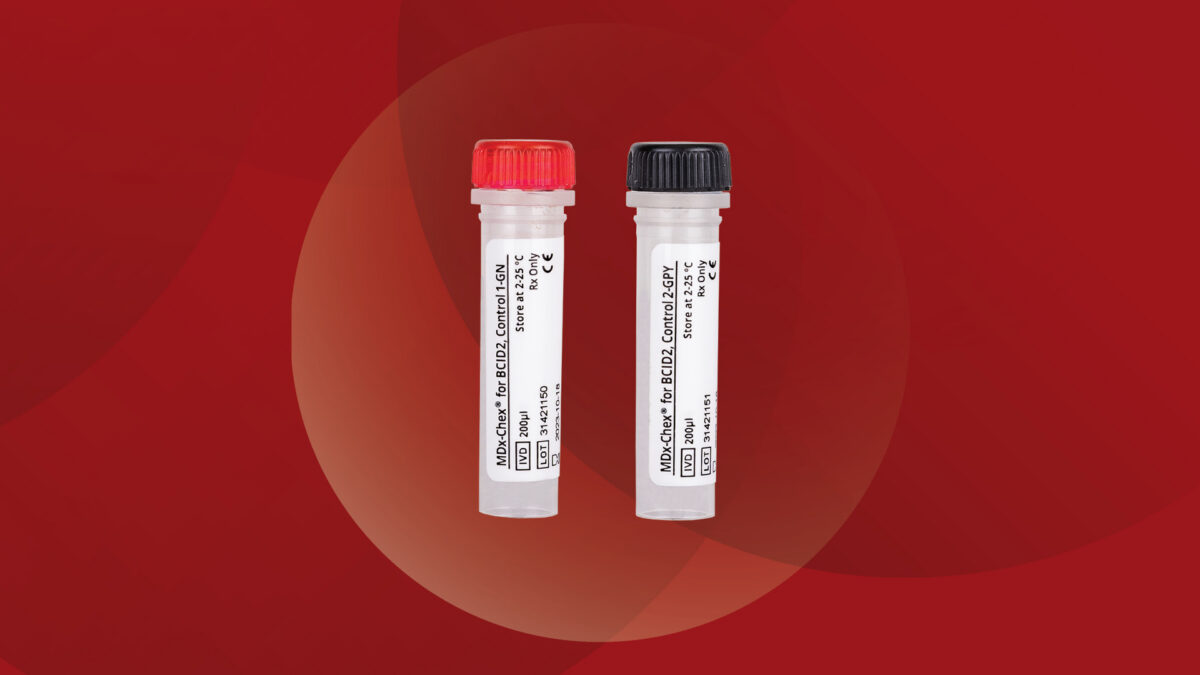
MDx-Chex® for BCID2
Covers all 43 BCID2 bacteria, yeast and AMR gene targets.
FDA Class II IVD
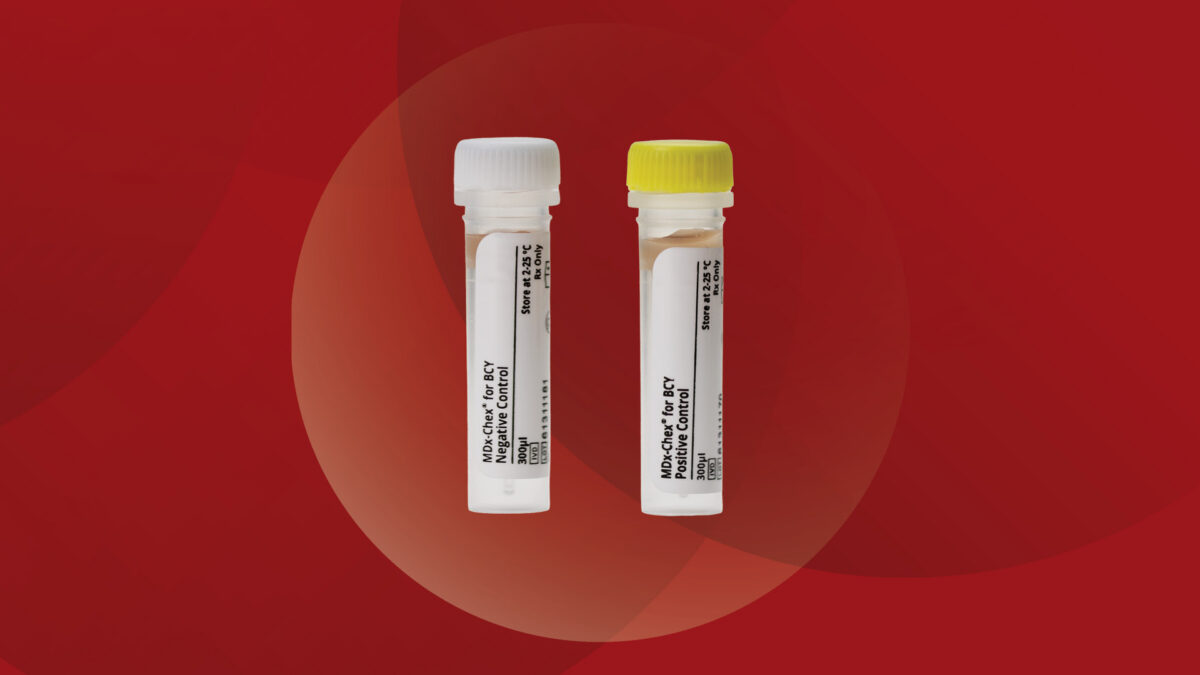
MDx-Chex® for BCY
Full-process control for the Yeast Blood Culture Assay.
Chemiluminescence · LIAISON PLEX®
FDA Class II IVD
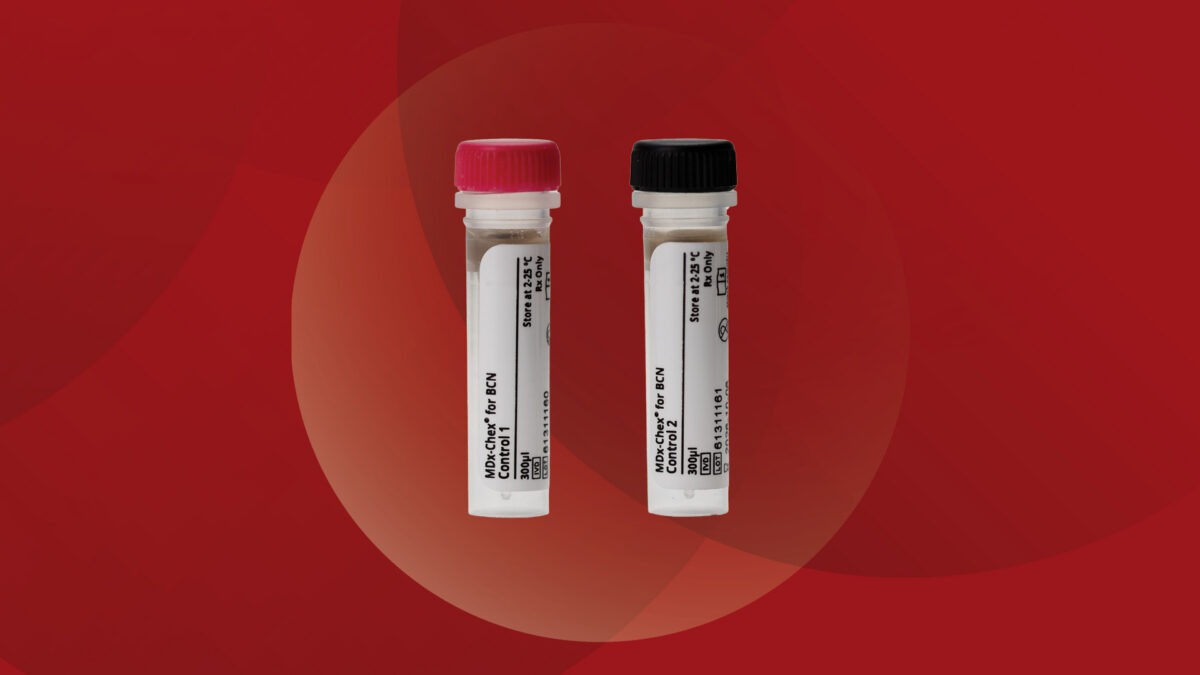
MDx-Chex® for BCN
Full-process control for the Gram-Negative Blood Culture Assay.
FDA Class II IVD
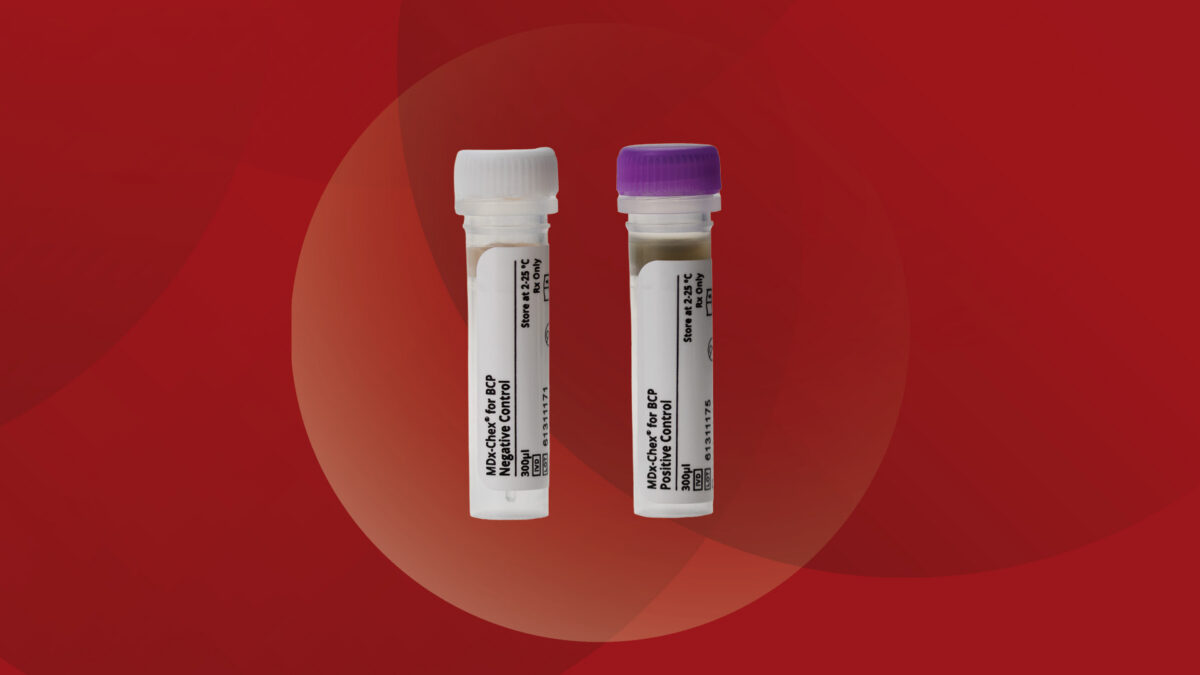
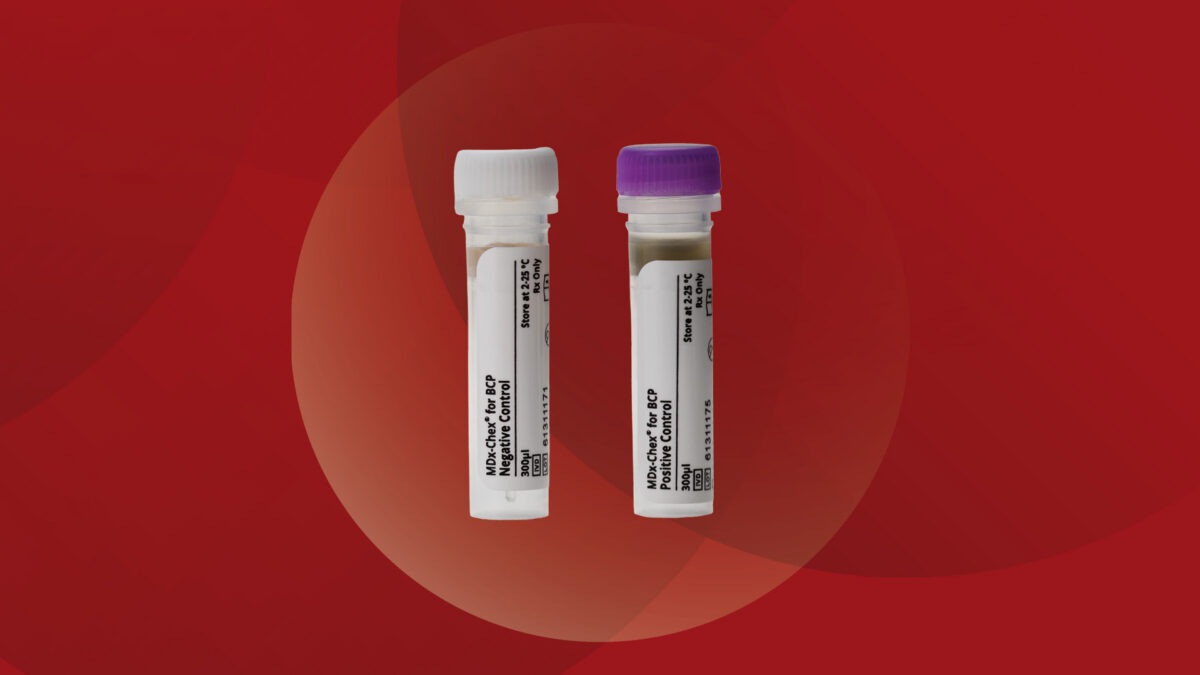
MDx-Chex® for BCP
Full-process control for the Gram-Positive Blood Culture Assay.
Microarray Hybridization · Luminex VERIGENE®
FDA Class II IVD
MDx-Chex® for BC-GP
Validates the BC-GP Panel workflow, extraction through silver-stain detection.
FDA Class II IVD
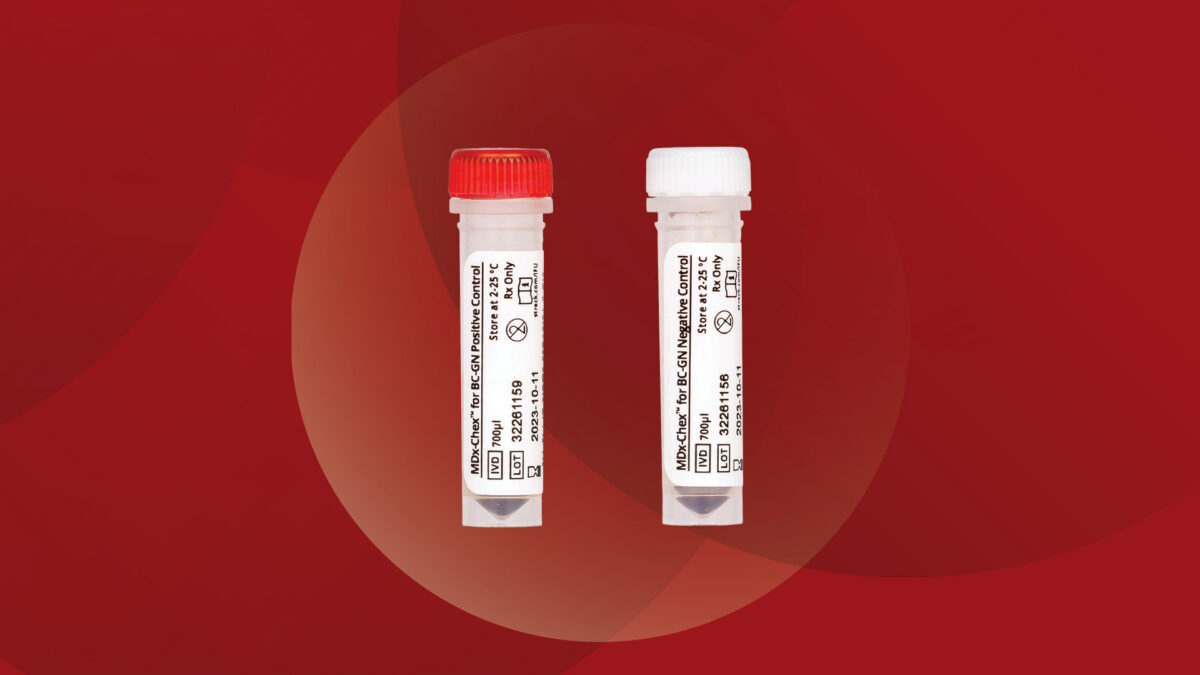
MDx-Chex® for BC-GN
Validates the BC-GN Panel workflow, extraction through silver-stain detection.
Documentation
Regulation
Standard
Portfolio
Full Molecular QC Line
Browse every Streck molecular control across applications, not just blood culture.
Build Your Control Alongside Your Assay
Developing a new blood culture panel, or adding a chemistry Streck doesn’t yet cover? We co-develop full-process controls validated specifically for your platform through feasibility, design lock and transfer to manufacturing, alongside your own assay timeline rather than after it ships. That’s the model behind our work with Diasorin on the LIAISON PLEX® blood culture line, where MDx-Chex® for BCN, BCP and BCY shipped as validated controls alongside the assays themselves.
Built for Full-Process Reliability
Independently manufactured assays that include a positive control for every gene target and an internal control against inhibition, degradation and poor extraction, so a negative result means the gene truly isn’t there.
54+
years of scientific excellence
Zero
FDA recalls
70,000+
labs worldwide rely on
Streck products
ISO 13485
certified manufacturing