
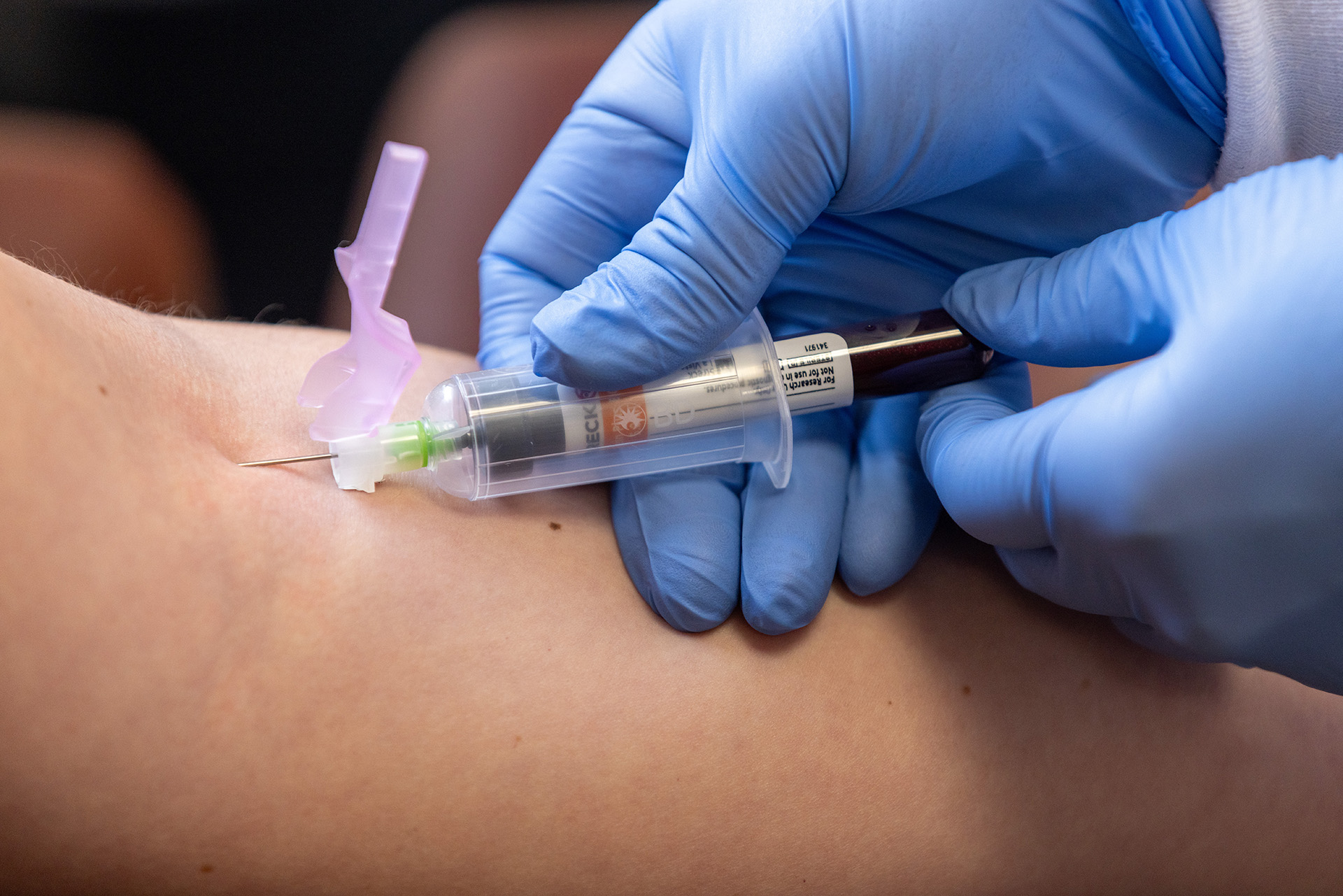
Most laboratory error discussions focus on instruments, reagents and pipelines. But every assay shares one hidden dependency: the assumption that the sample still represents the patient it came from. Here’s what pre-analytical variability actually means, and how to know if it’s affecting your work.
01
What is pre-analytical variability?
It’s everything that can change a sample between the moment blood is drawn and the moment it’s analyzed: temperature exposure, shipping delays, cell breakdown, processing timing. Any of these can alter what the instrument actually measures, independent of anything the assay or analyst did.
02
Why does it matter?
Your results are only accurate if the sample still represents the patient. When samples degrade during storage or transit, results can reflect handling conditions more than biology. The instrument has no way to tell the difference.
03
How would I know if it’s affecting my results?
Usually, you wouldn’t. That’s the real problem. Pre-analytically compromised samples rarely fail QC checks or trigger an error flag. The signs are subtler:
- Results that don’t replicate between sites or batches
- Yields that drop when samples take longer to reach the lab
- Biomarker profiles that shift depending on when processing happened
- Flow cytometry data that only holds up when the sample is processed same-day
If any of those sound familiar, the root cause may be happening before the sample ever reaches the instrument.
04
What actually happens to a blood sample after it’s drawn?
A biological clock starts. White blood cells begin to break down, releasing DNA into the plasma. Enzymes that degrade nucleic acids stay active. Platelets activate. In a standard collection tube, nothing stops any of this: the assumption is immediate processing. In real-world workflows, that’s rarely true.
05
Which workflows are most affected?
Any workflow measuring something fragile or low-abundance. Cell-free DNA and cell-free RNA are especially vulnerable because they’re present in tiny amounts and quickly overwhelmed by degradation products. Flow cytometry is affected because white blood cell surface markers deteriorate within hours. Multi-site studies and batch processing are particularly exposed. Samples experience varying conditions before they arrive.
06
What is sample stabilization?
Preservation chemistry added to a collection tube that arrests the biological processes that compromise samples. A preservative added to a collection tube that helps slow the biological processes that compromise samples. It helps limit cell lysis, reduces enzyme activity and limits platelet activation, pausing the clock at draw time so the sample reflects the patient’s biology whenever it’s analyzed, not only if it’s analyzed immediately.
07
How is a stabilization tube different from a standard EDTA tube?
Standard EDTA tubes prevent clotting. That’s it. Stabilization tubes contain an added preservative that helps slow down cell breakdown, enzyme activity and platelet activation, allowing samples to remain stable at room temperature for days instead of hours.
08
Do I need cold-chain shipping?
No. Most stabilization tubes are designed for room-temperature storage and ambient shipping. Extended ambient stability removes logistical complexity and makes collection from remote or distributed sites practical without specialized handling.
09
Is this the same as quality control?
Related, but different. QC catches problems after the fact. Stabilization helps limit them at the source. A stabilized sample still requires appropriate downstream QC, but it arrives with its biological integrity intact, so you’re not trying to QC your way out of a pre-analytical problem.