SEARCH
Nucleic Acid BCT is a direct draw venous whole blood collection device that maintains draw-time concentrations of cell-free DNA, cell-free RNA and extracellular vesicles for up to 7 days when stored at room temperature.
Once isolated from stored plasma, cell-free DNA and cell-free RNA are suitable for many downstream applications.
For Research Use Only. Not for use in diagnostic procedures.
Nucleic Acid BCT should only be used for research or the development of new assays.
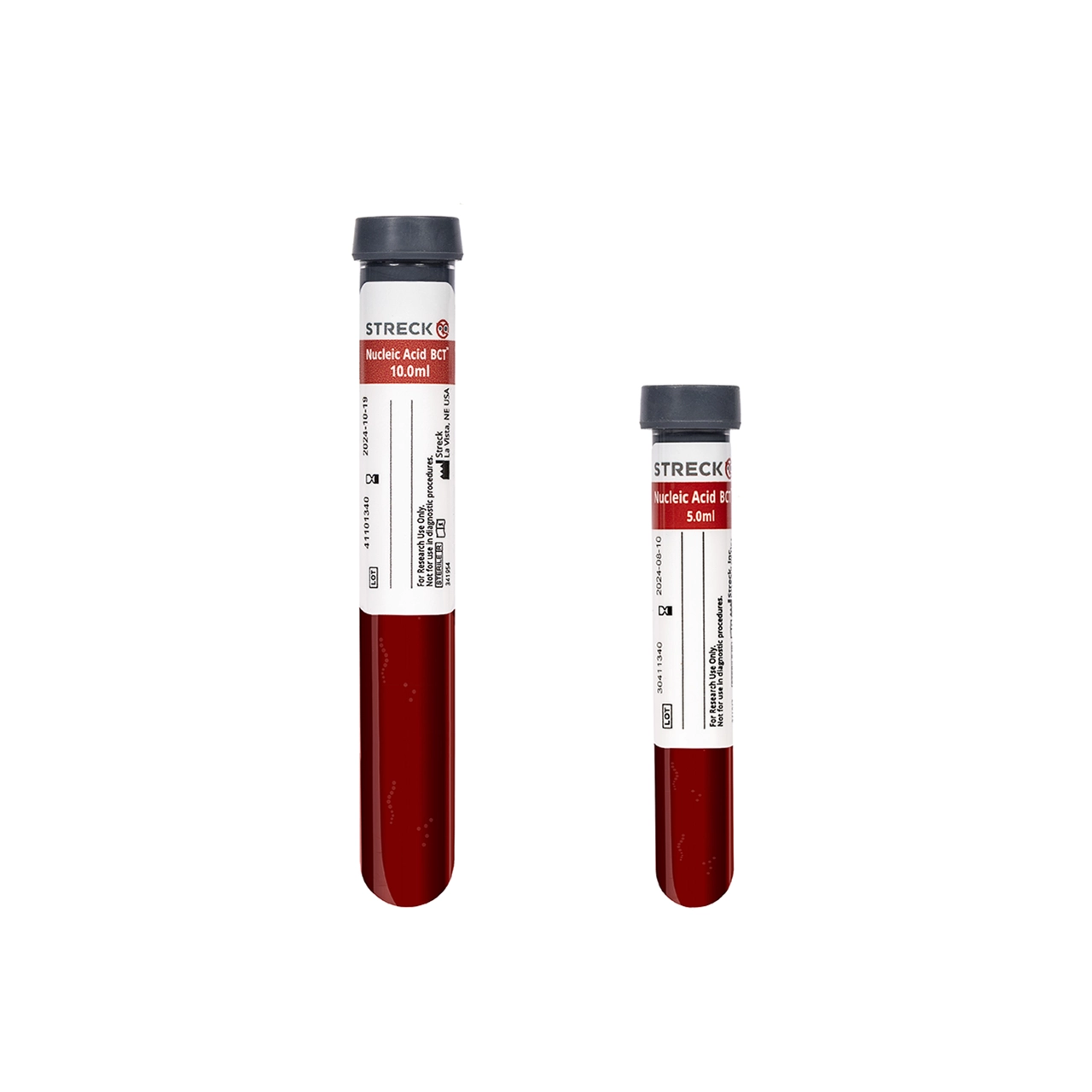
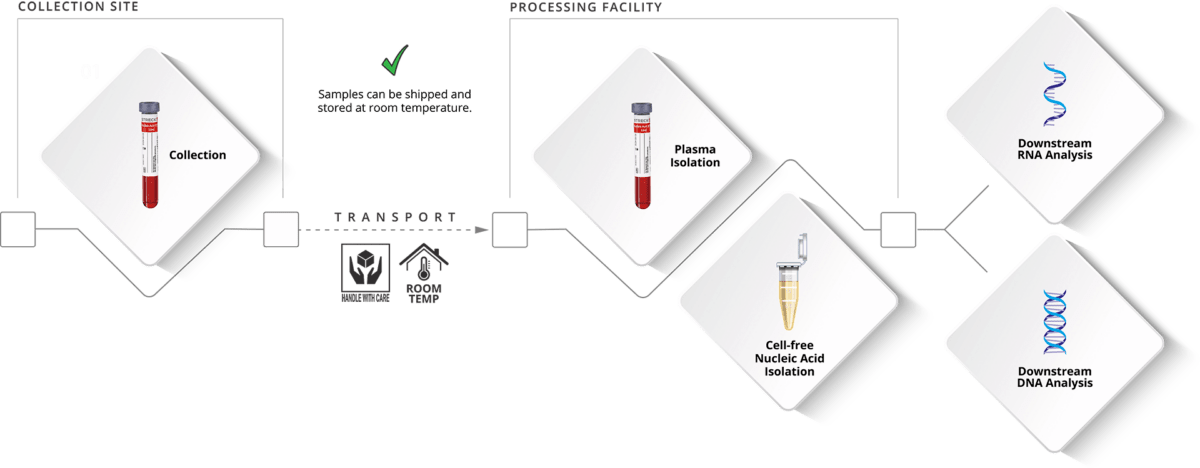
All your workflows in one tube!
Stabilizes sample for cell-free DNA, cell-free RNA and extracellular vesicles
7-day sample stability when stored at room temp
Compatible with commercially available total plasma nucleic acid isolation kits
Limits degradation of white and red blood cells, providing sample integrity during storage, shipping and handling of blood samples
Room temperature storage reduces costs and complications associated with cold chain shipping
Eliminates the need for immediate plasma preparation
One plasma isolation protocol for both cell-free DNA and cell-free RNA
| Description | Item Number |
|---|---|
| 6-tube pack (5.0 mL), RUO | 230637 |
| 100-tube box (5.0 mL), RUO | 230638 |
| 1000-tube case (5.0 mL), RUO | 230639 |
| 6-tube pack (10.0 mL), RUO | 230644 |
| 100-tube box (10.0 mL), RUO | 230645 |
| 1000-tube case (10.0 mL), RUO | 230646 |
Nucleic Acid BCT is a direct draw venous whole blood collection device that maintains draw-time concentrations of cell-free DNA, cell-free RNA and extracellular vesicles for up to 7 days when stored at room temperature. Unlike Cell-Free DNA BCT which focuses primarily on cell-free DNA and CTCs, Nucleic Acid BCT stabilizes multiple analyte types in a single tube, allowing researchers to perform multiple workflows from one blood draw.
Extracellular vesicles, such as exosomes, are small membrane-bound particles released by cells that contain proteins, lipids and nucleic acids. They serve as important biomarkers in many diseases. Nucleic Acid BCT maintains the integrity of these vesicles during storage and transport, preserving them for downstream analysis in cancer research, biomarker discovery and other research applications.
Yes, Nucleic Acid BCT is compatible with commercially available total plasma nucleic acid isolation kits and next-generation sequencing workflows.
No, Nucleic Acid BCT provides 7-day sample stability when stored at room temperature. This eliminates the need for immediate plasma preparation and reduces costs and complications associated with cold chain shipping, making it easier to collect samples at remote sites or batch process samples for improved laboratory efficiency.
Research studies analyzing multiple biomarkers from the same sample face compounded pre-analytical challenges. Cell-free DNA, cell-free RNA and extracellular vesicles all degrade at different rates, and traditional blood collection tubes require immediate processing to preserve any of these analytes. Nucleic Acid BCT’s room temperature stabilization technology maintains all three analyte types simultaneously for up to 7 days, enabling comprehensive multi-omics analysis from a single blood draw without the logistical burden of immediate processing or cold chain transport.
Nucleic Acid BCT prevents the release of intracellular RNA, DNA and proteins that would contaminate the plasma fraction and interfere with accurate measurement of circulating biomarkers. This stabilization provides sample integrity during storage, shipping and handling of blood samples.
Nucleic Acid BCT maintains draw-time mutant allele frequency of important biomarkers for up to 7 days of ambient temperature storage by preventing white blood cell breakdown and the release of genomic DNA that can dilute rare mutant variants. This preservation of low-frequency variants is critical for liquid biopsy applications where rare mutations must be detected against a background of normal DNA.
 Powered by Bioz