SEARCH
CD-Chex CD103 Plus is a ready-to-use control for evaluating CD103, CD30, CD38, CD56, CD138 and cytoplasmic Lambda expression by flow cytometry. This control provides assay values for two distinct abnormal leukocyte populations: CD45+ and CD45–. The CD45+ abnormal lymphocyte population contains multiple markers designated as “rare flow antigens” by CAP, including CD30 and CD103.
CD-Chex CD103 is designed to monitor reagent staining, erythrocyte lysis, sample preparation and instrument performance and is compatible with BD® Biosciences and Beckman Coulter® flow cytometry systems.
For Research Use Only. Not for use in diagnostic procedures.
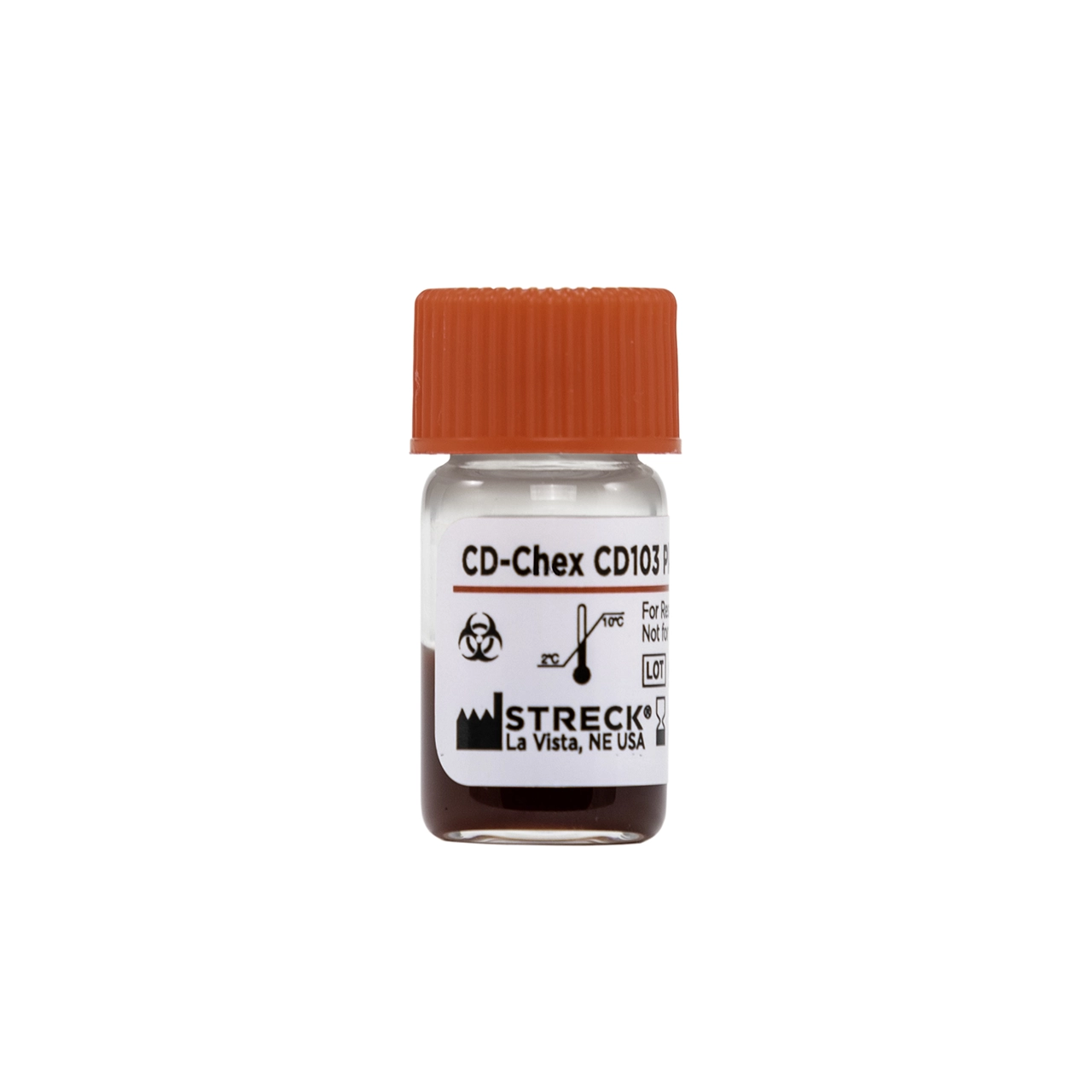
Only commercially available control assayed for CD103, CD30, CD38, CD56, CD138 and cytoplasmic Lambda
Two distinct abnormal leukocyte populations: CD45+ and CD45
Compatible with BD Biosciences and Beckman Coulter flow cytometry systems
30-day open-vial stability; 90-day closed-vial stability
Helps clinical laboratories meet quality requirements for leukemia and lymphoma immunophenotyping
Manufacturer established assay ranges – no need to verify range per CAP requirements
Eliminates the need for labs to hold and validate patient samples for use as a control
Access to STATS®, our free interlaboratory quality control program for peer group data comparison
| Description | Item Number |
|---|---|
| 1 x 1.0 mL | 213567 |
| 2 x 1.0 mL | 213568 |
CD-Chex CD103 Plus is a ready-to-use positive flow cytometry control for evaluating CD103, CD30, CD38, CD56, CD138 and cytoplasmic Lambda expression. This control provides assay values for two distinct abnormal leukocyte populations: CD45+ and CD45–, with the CD45+ abnormal lymphocyte population containing multiple markers designated as “”rare flow antigens”” by CAP, including CD30 and CD103.
CD-Chex CD103 Plus is the only commercially available control assayed for CD103, CD30, CD38, CD56, CD138 and cytoplasmic Lambda. This unique combination of markers helps clinical laboratories meet quality requirements for leukemia and lymphoma immunophenotyping without needing to hold and validate patient samples for use as a control.
CD-Chex CD103 Plus offers 30-day open-vial stability and 90-day closed-vial stability. This extended stability reduces the frequency of lot-to-lot correlations and shipments, saving time and resources while ensuring consistent quality control performance.
CD-Chex CD103 Plus is compatible with BD Biosciences and Beckman Coulter flow cytometry systems. This broad compatibility allows laboratories using either platform to implement the same quality control material for their leukemia and lymphoma immunophenotyping workflows.
No, CD-Chex CD103 Plus provides manufacturer established assay ranges, so there is no need to verify the range per CAP requirements. This saves time and resources while ensuring compliance with quality control standards for clinical flow cytometry testing.
STATS is Streck’s free interlaboratory quality control program for peer group data comparison. All CD-Chex CD103 Plus users have access to STATS, which allows laboratories to compare their results with peer institutions, monitor performance trends and identify potential issues with reagents, instruments or procedures.
CD-Chex CD103 Plus contains stabilized human blood cells that replicate a patient sample, allowing the control to test the entire preparation, staining and analysis procedure. This patient-like composition provides more realistic quality control assessment than synthetic alternatives and helps laboratories identify issues across the complete flow cytometry workflow from sample preparation through final analysis.
CAP designates certain markers like CD30 and CD103 as “”rare flow antigens”” that require specific quality control measures. CD-Chex CD103 Plus is the only commercially available control that includes these rare antigens along with other clinically relevant markers, allowing laboratories to comply with CAP guidelines without maintaining separate controls or using patient samples for quality control verification.”
 Powered by Bioz